




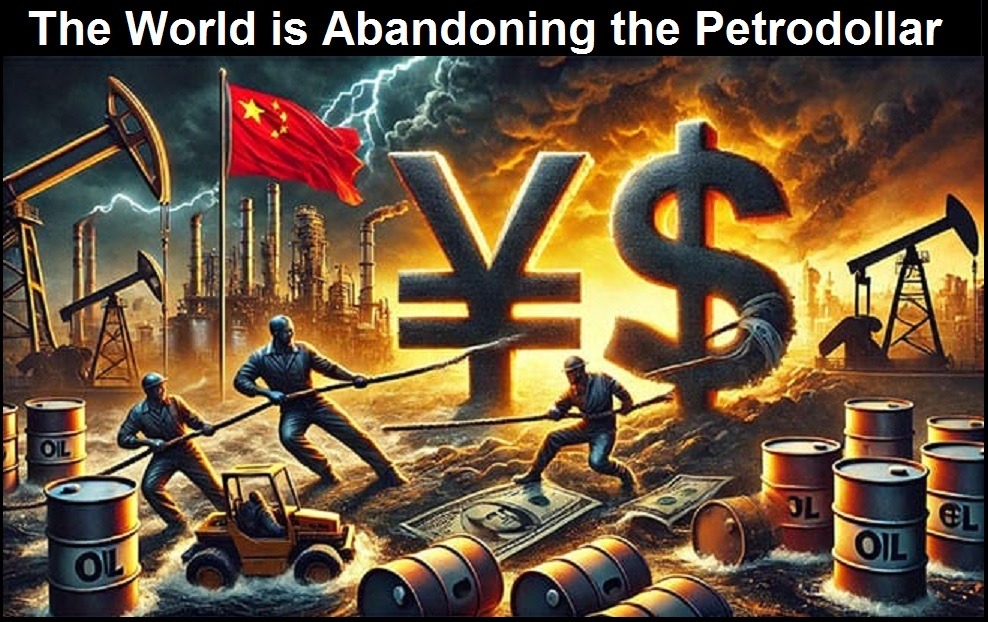
Comments by Brian Shilhavy
Health Impact News
The U.S. corporate news headlines for the past 24 hours has stated that there is a 2-week ceasefire agreement in place between Iran and the U.S.
But as of the time of my writing this as the U.S. Stock Market closes on Wednesday, April 8th, the only ones who appear to be benefiting from this alleged “ceasefire” appear to be investors on Wall Street, as this “news” triggered a huge rally on Wall Street today.
Prior to this, BOTH Iran and the U.S. were claiming to have “won” the war by gaining concessions for the “ceasefire.”
But this “news” quickly changed as things unfolded today, as Israel reportedly carried out their largest attacks on Hezbollah in Lebanon since the Iran War started, which Iran claims violated the ceasefire agreement, while the Trump administration claimed that Lebanon was not part of the agreement.
And while there was reportedly some kind of agreement in place to keep the Strait of Hormuz open, at the time of this writing, it is officially closed by Iran due to reporting by many sources, some of which track ships passing through the strait.
However, in what may be in my opinion the most significant piece of news to be published in the past 24 hours, the U.S. corporate news is reporting, for the first time, that Saudi Arabia did, indeed, cancel the U.S. petrodollar agreement 2 years ago, as we published here on Health Impact News at the time, as well as a few other sources in the alternative media.
I knew this was very significant back then, because several “trolls” tried to comment on that article to debunk it, and some tried to contact me directly, stating that this was “false news”, as all the “fact-checking” sites also tried to debunk it.
Here is our original article from 2024:
Saudi Arabia Ends 80-Year-Old PetroDollar U.S. Agreement: Joins China-Led Central Bank Digital Currency Coalition
Fast forward to today, as we are over 1 month now into the Iran War and the Strait of Hormuz remains closed, and now all of a sudden permission has apparently been granted to the corporate media to cover this event from 2024.
Here is an article that Fortune published last night.
2 years ago, Saudi Arabia quietly canceled the ‘petrodollar’ deal with America that wired the world economy for 50 years. Then war broke out in Iran
Excerpts:
The gold standard may have ended in the early 1970s, but something else quietly took its place for the next 50 years: oil. The so-called “petrodollar” system wasn’t well understood for most of this time, but a secret deal between Henry Kissinger and Saudi Arabia ensured the dollar would remain the dominant reserve currency.
The outbreak of war in Iran is exposing America’s Achilles’ heel, though, as China positions the “petroyuan” as the obvious successor, and to top it all off, the Saudis quietly killed the petrodollar two years ago.
U.S. and Israel’s war on Iran has put a spotlight on the strength of the “petrodollar,” which makes up the cornerstone of America’s dominance over global trade, but economists warn the currency architecture has been eroding at its edges for years now.
Analysts are heralding the 2020s as marking the biggest change in the world’s relationship to the dollar since 1974, and every day the Iran war continues, the cracks in the old system grow wider and wider.
Kissinger’s secret trip
In 1974, the U.S. negotiated a deal with Saudi Arabia in which the Gulf country agreed to sell oil in U.S. dollars alone. In return, the U.S. would provide military aid and security. The U.S., then under President Richard Nixon, was looking to secure global demand for the U.S. dollar following the end of the gold standard in 1971. In the wake of the 1973 oil crisis, the U.S. was motivated to solidify its own oil supply chain.
Because oil was and is so fundamental to nearly every industry, the “petrodollar” became ubiquitous, and the dollar became the cornerstone of the global economy: Oil-rich countries needed a place to put their growing reserves of dollars and turned to U.S. Treasuries. Countries buying oil did so in greenbacks.
The ongoing conflict in the Gulf, however, has newly exposed the weakness of the petrodollar. Following the first U.S.-Israeli attack, Iran effectively closed the Strait of Hormuz, through which 20% of the global oil supply is traded. Industry experts have said some ships are able to pass through the choke point by paying in Chinese yuan.
According to economists, Gulf countries have been quietly diversifying their trade partners for years prior to the current conflict, trading oil outside the U.S. dollar and therefore definitionally destroying the principle of the petrodollar as the exclusive currency for trading oil.
EBC Financial Group analyst Michael Harris wrote in a note on Monday that the dollar’s share of global foreign exchange reserves has reached a 25-year low, falling from 71% in 1999 to roughly 57% today.
China has positioned itself to capitalize on any cracks in confidence in the petrodollar, according to Fadhel Kaboub, an associate professor of economics at Denison University and president of the Global Institute for Sustainable Prosperity. China consumes about 15 million to 16.6 million barrels of oil per day, making up about 15% to 16% of the world’s total oil consumption.
China is following the U.S. playbook when the petrodollar was first cemented by signaling to allied countries in the Gulf that it is able to provide a “security umbrella” and currency alternative in times of geopolitical stress.
Deutsche Bank economists warned the U.S. and Israeli attacks on Iran would continue to strengthen its ties to China, subsequently bolstering the yuan at the expense of the dollar.
More broadly, Wight said, the revived spotlight on the petroyuan, as well as President Donald Trump’s persistent threats to redouble attacks on Iran, have signaled to other countries that there are instances in which the petrodollar may not be the most favored currency.
While more than 90% of cross-border trade in the Americas is done through the petrodollar, according to a Deutsche Bank report, that share drops to about 70% of trade invoicing in the Asia-Pacific, and about 20% in Europe.
“That, in and of itself, is not going to cause the whole system to collapse,” Wight said.
“But I think that the increasing aggressiveness of the United States in multiple fields—both in terms of sanctions and in terms of warfare—has caused more countries to kind of wonder, ‘Do we want to be completely tied or dependent on the dollar if things go sour for whatever reason?’”
This admission by the corporate media in the U.S. that the petrodollar is collapsing in favor of the petroyuan, speaks volumes about what the billionaires who run this country now believe in regards to the collapse of the dollar, far more than the political rhetoric about the Iran War.
They seem to be admitting defeat, and that the U.S. can no longer control the flow of the world’s oil.
More news today from our Telegram Channel.
Iran may have just put the brakes on reopening the Strait of Hormuz
Wall Street opened up today with huge gains over the news that the U.S. and Iran have agreed to a 2-week ceasefire.
However, as they day goes on, people are beginning to realize that Israel was not part of this agreement, and they just completed their largest attacks in Lebanon since the war started.
From the Wall Street publication MarketWatch:
Excerpts:
A tenuous cease-fire between the U.S. and Iran brought crude futures sharply lower on Wednesday and shifted focus to the likely slow work of reopening the Strait of Hormuz, whose closure has stranded hundreds of ships, including massive oil tankers.
Renewed attacks, however, seem to be putting the brakes on that reopening.
Iranian news agency Fars News said on X that the passage of oil tankers through the Strait of Hormuz had been halted “following Israel’s attacks on Lebanon.”
Israeli Prime Minister Benjamin Netanyahu’s office said late Tuesday that the cease-fire agreement didn’t include Lebanon.
Earlier Wednesday, Saudi Arabia’s East-West pipeline, which had emerged as a escape valve for Saudi imports as the conflict dragged on, was reportedly hit by a drone.
According to the Marine Traffic website and parent company Kpler, some 426 oil tankers, 34 cooking-gas carriers and 19 ships carrying liquified natural gas are waiting to transit the strait.
Ceasefire for all or for none: Iran shuts Hormuz over Lebanon attacks
From Al Mayadeen:
Excerpts:
Ibrahim Rezaei, spokesperson for the Iranian Parliament’s National Security and Foreign Policy Committee, said in a post on X:
“In response to the brutal Israeli aggression on Lebanon, the movement of ships in the Strait of Hormuz must be immediately stopped, and a strong, decisive strike must be launched to prevent further attacks by the Israeli entity.”
The Iranian official paid tribute to the Lebanese people, asserting that “we must not leave them alone for a second.”
Rezaei emphasized the need for clarity on the terms of engagement and rejected the separation of the battlefields in Iran and Lebanon, stating, “Either there is a ceasefire on all fronts, or there is no ceasefire on any front.”
Comment on this article at HealthImpactNews.com.
This article was written by Human Superior Intelligence (HSI)

See Also:
Understand the Times We are Currently Living Through
New FREE eBook! Restoring the Foundation of New Testament Faith in Jesus Christ – by Brian Shilhavy

What Kind of Person did Jesus Say was True with no Injustice in Them?

KABBALAH: The Anti-Christ Religion of Satan that Controls the World Today

Christian Teaching on Sex and Marriage vs. The Actual Biblical Teaching

Exposing the Christian Zionism Cult

The Bewitching of America with the Evil Eye and the Mark of the Beast
Jesus Christ’s Opposition to the Jewish State: Lessons for Today
Identifying the Luciferian Globalists Implementing the New World Order – Who are the “Jews”?
The Brain Myth: Your Intellect and Thoughts Originate in Your Heart, Not Your Brain

What is the Condition of Your Heart? The Superiority of the Human Heart over the Human Brain

The Seal and Mark of God is Far More Important than the “Mark of the Beast” – Are You Prepared for What’s Coming?

The Satanic Roots to Modern Medicine – The Image of the Beast?

Medicine: Idolatry in the Twenty First Century – 10-Year-Old Article More Relevant Today than the Day it was Written

Having problems receiving our emails? See:
How to Beat Internet Censorship and Create Your Own Newsfeed
We Are Now on Telegram. Video channels at Bitchute, and Odysee.
If our website is seized and shut down, find us on Telegram, as well as Bitchute and Odysee for further instructions about where to find us.
If you use the TOR Onion browser, here are the links and corresponding URLs to use in the TOR browser to find us on the Dark Web: Health Impact News, Vaccine Impact, Medical Kidnap, Created4Health, CoconutOil.com.