by Brian Shilhavy
Health Impact News
While it has taken longer than I thought, people are finally waking up to the fact that AI LLMs (large language models) are not capable of thinking and reasoning like human beings are.
When ChatGPT was launched in November of 2022 by Microsoft, it became the most downloaded app of all time, and the AI LLM races began.
While the actual technology behind AI LLMs is actually pretty amazing, it was the belief system that quickly developed around it that drove massive amounts of spending to try and apply it to many applications, some of which were merely pure fantasy and science fiction.
Because the results of an AI search or response to a question were being displayed in speeds we had never seen before, and because those results were programmed to be delivered in human language form, the illogical leap of faith was made that these were more than just machines with incredibly fast microprocessors and huge amounts of computer RAM stored in computer Clouds.
The belief was that these AI models could do more than just present the data it searched, but that it could somehow take the data and reason and think like a human being does even though it was not programmed to do so, which would result in new frontiers of research and achievements.
But at the end of the day AI LLMs are still just computer code being run on computer hardware, doing what it was programmed to do.
This fact was realized very recently in the area of Big Pharma drug development, where $billions were invested into new research that was brought about due to AI LLM technology.
Billions of dollars were invested into these two drugs which had made it to Phase 3 drug trials.
But this past weekend, it was acknowledged that these two drugs were a complete failure, performing no better than placebos, and they were halted.
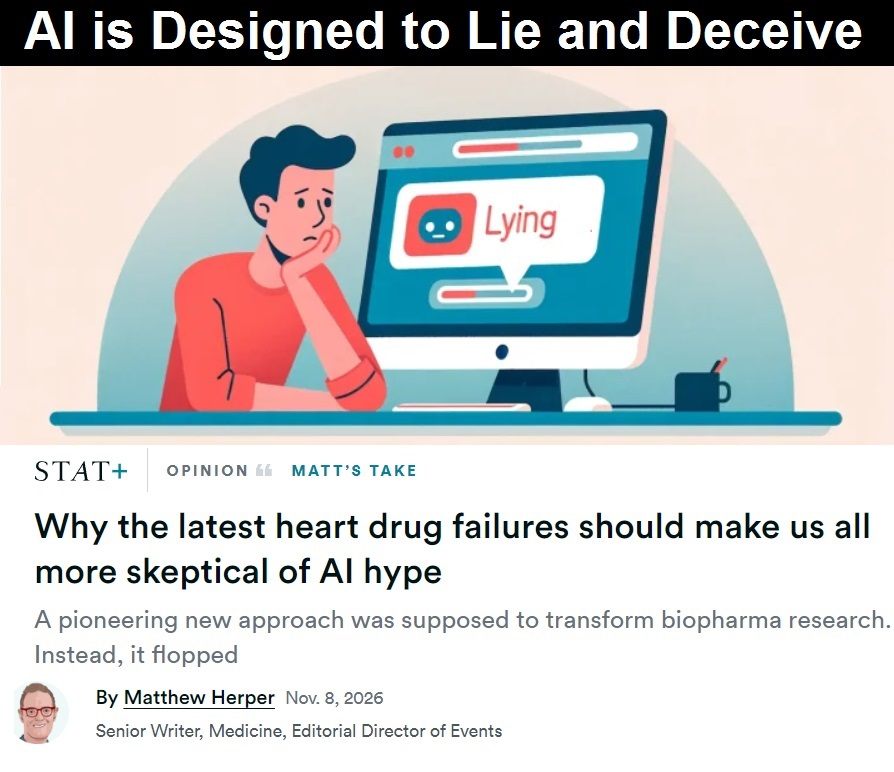
Why the latest heart drug failures should make us all more skeptical of AI hype
A pioneering new approach was supposed to transform biopharma research. Instead, it flopped
Excerpts:
The next time someone tells you that artificial intelligence, or any other new technology, is going to cure every disease, point them to the effort to fight heart attacks and strokes, which together are the largest killer in the developed world.
Because again and again, pharmaceutical researchers have learned the same hard lesson: Technologies that were supposed to speed new medicines to patients have fallen short. Two studies presented Saturday at the annual meeting of the American Heart Association are a perfect example. A new understanding of genetics was supposed to increase the odds of success — and did anything but.
Source [1].
Novartis, Novo Nordisk Heart Drug Failures Should Temper AI Hype
Two large trials of heart drugs from Novartis and Novo Nordisk found no benefit against heart attacks and strokes, results presented at the American Heart Association meeting. A medicine writer says the setbacks are a caution for claims that new technology will cure disease.
Excerpts:
Two large trials of heart drugs from Novartis and Novo Nordisk showed no benefit in preventing heart attacks and strokes, according to results presented at the American Heart Association’s annual meeting in November 2026.
The heart drug failures should make investors and the public more cautious about promises that new technology will quickly deliver cures, argues Matthew Herper, a senior medicine writer who covered the meeting.
Novartis tested a drug called pelacarsen. It lowers a substance in the blood called Lp(a), which genetic research had indicated should reduce cardiovascular risk. The trial found no effect on the rate of heart attacks and strokes.
Novo Nordisk ran a separate large study of an anti-inflammatory drug that targets a protein called IL-6. That study also showed no benefit.
Both drugs were aimed at targets that looked promising on paper. Neither delivered in patients.
Heart attacks and strokes together are the largest killer in the developed world, Herper noted. Drugmakers have spent years searching for new ways to prevent them.
Both trials were built on newer ideas about how the disease works. Herper says the genetics behind these targets was supposed to improve the odds of success. In his words, it “did anything but.”
Herper draws a wider lesson for anyone pitching artificial intelligence, or any other new technology, as a way to cure every disease. He points to the repeated record in heart disease, where pharmaceutical researchers have learned that technologies meant to speed new medicines to patients have fallen short.
For companies, a failed late-stage trial is costly. These studies involved large numbers of patients and tested whether a drug cut real events, such as heart attacks and strokes, rather than a number on a lab test. Lowering Lp(a) did exactly what the drug was designed to do, yet it did not change the outcomes that matter to patients.
Source [2].
A promising drug for an inherited heart risk flops, stunning doctors
Excerpts:
The study randomly divided 8,350 people who’d previously experienced a cardiovascular event like a heart attack or stroke and high levels of Lp(a) into two groups: Half received pelacarsen, while the other half got a placebo.
Neither the patients nor the study investigators knew who was getting the drug and who wasn’t. Most patients were followed for nearly five years.
At the end of the study, researchers’ main comparison between the two groups was an outcome called MACE — major adverse cardiovascular event. It included any kind of heart-related death, as well as non-fatal heart attacks, strokes, and whether patients had needed an urgent procedure to treat a blocked blood vessel, like heart bypass surgery.
When the study results were unblinded, however, there was a surprise. While high-risk patients taking pelacarsen had much lower levels of lipoprotein (a) than at the start of the study, they had virtually the same risk of dying of heart disease or having a serious cardiovascular event as someone in the placebo group. Roughly 12% of patients in each arm of the study had a serious heart-related event over the course of the study, whether they got pelacarsen or not.
The full results of the study published in the the New England Journal of Medicine on Saturday. Although researchers looked at the data several different ways, breaking out outcomes by underlying medical conditions like diabetes and looking at the drug’s impact on separate types of cardiovascular events, there was essentially no difference.
The medication did exactly what everyone expected it would, lowering Lp(a) levels by an average of about 77% in patients who took it. But there was no sign that it had any impact on the risk of death from cardiovascular disease, heart attacks, strokes, or the risk that a person might need a stent or bypass surgery to treat a clot near their heart.
“I am flabbergasted,” said Dr. Fatima Rodriguez, chief of preventive cardiology at Stanford University and was not involved in the research.
“There is no signal.”
Source [3].
In my almost two decades of covering the deception and corruption in Big Pharma, I have seldom, if ever, found such admissions of failures in pharmaceutical drugs like I have seen in these reports. But in order to blame AI for these failures, they had to first admit that they were failures.
In fact, ever since Merck’s cholesterol lowering drug Lipitor was the all-time best-selling drug before it lost its patent, the results have always been the same as these drug trials: the drug will lower one’s cholesterol, but it will not prevent death by cardiovascular disease.
This has ALWAYS been true! It is just that Big Pharma did not want to admit this, due to the massive profits they have made over the years by selling drugs to people to lower their cholesterol, a substance our body needs, or we would instantly die.
25% of our body’s cholesterol is in our brains, and there is solid research that the increase in prescribing these statin cholesterol-lowering drugs is linked to an increase in neurological diseases in older people such as Alzheimer’s, Parkinson’s, and dementia.
We published this back in 2012, just after Lipitor’s patent expired and the FDA began issuing warnings about the side effects of statin drugs:
The Clue to Why Low Fat Diet and Statins may Cause Alzheimer’s [4]
However, due to the belief that AI could look at the same data and come up with new ideas about cholesterol and heart disease, is what drove this most recent research, and ended up in a total failure.
AI is Designed to Lie to You – Fake Viruses and Fake Intelligence
 [5]
Image Source [5].
This religious belief in AI and the thinking that it can act and reason like human beings, is destroying our economy.
From the New York Times [6]:
Tech Stocks Had a Terrible Day. What’s Coming Could Be Worse.
Excerpts:
We’ve been here before. As with so many other transformational inventions — railroads, electricity, the internet — outsize enthusiasm for artificial intelligence is supporting a level of spending that’s gotten ahead of plausible profit expectations, a defining characteristic of a financial bubble.
Now that the stocks of some A.I. builders and suppliers are wavering, we think it’s important to ask the next critical question.
What happens to the American economy if this bubble bursts? The damage could run deep.
It was just over a year ago when we argued that the enormous sums being poured into A.I. are reminiscent of the go-go internet era of the 1990s and the housing boom of the 2000s, both of which turned out to be financial bubbles whose bursting spilled over into the broader economy, leading to job and income losses that affected most Americans.
Now, we’re already starting to see signs that this latest boom may be fading: The tech-heavy Nasdaq index fell by more than 5 percent Thursday and is down nearly 10 percent since Oct. 1. Growing investor nervousness led the prominent A.I. lab OpenAI to dial back its latest funding round target by $10 billion.
What happens if the A.I. boom goes bust?
There’s a consensus building among investors, academics and market analysts that any downturn would be relatively mild, similar to what happened in the early 2000s, after the dot-com bubble burst.
The inflation-adjusted value of the overall economy, or real gross domestic product, shrank less than half a percent. And while unemployment rose, it was considerably lower than it was at the peak of the financial crisis.
Unfortunately, this consensus looks too optimistic.
First, the A.I. bubble is by all measures substantially larger than the dot-com bubble; the stock market has increased by more than it did between 1996 and 2000 and is currently worth 240 percent of G.D.P., versus 160 percent at the peak of the dot-com bubble.
This difference in magnitude means that if the stock market fell as much as it did over the course of the dot-com bust, the amount of lost wealth could translate into a reduction in real consumer spending that would be twice as large. That reduction would show up as a lower demand for goods and services, which could in turn reduce business investment, hiring and overall growth.
Our current economy is also more fragile than it was back in 2000.
Hiring has been sluggish and real wages are falling, the latter because of elevated war-induced inflation. The Federal Reserve has been gradually raising interest rates, leading to higher borrowing costs and potentially dialing back economic activity.
Additionally, today’s fiscal conditions and outlook are much worse. In 2001, the federal government ran a budget surplus of 1.2 percent of G.D.P.; today, it is running a historically large deficit of 6.2 percent of G.D.P. That could limit Congress’s willingness to inject even more borrowed money into the economy to offset any downturn.
To get a rough read on the magnitude of the damage triggered by what an A.I. bubble burst might do to the economy, we ran the same economic model that the Federal Reserve uses to simulate the workings of the macroeconomy.
The results confirmed our concerns.
Mapping a dot-com-style sell-off onto today’s markets would lead real G.D.P. to fall by more than three times as much as it did during the 2001 recession: 1.4 percent versus 0.4 percent. The unemployment rate would steadily climb from its current rate of 4.2 percent to above 7 percent.
Back when we first expressed our concerns about the stability of the A.I. investment boom, we noted that the companies building the A.I. models and the infrastructure to support them were mostly spending their own cash, meaning a bust would hurt them but not their lenders.
That’s no longer the case: $445 billion worth of A.I.-related debt, or 1.4 percent of G.D.P., was issued in the first eight months of 2026.
Source [6].
And not only are AI investments destroying our economy, they are giving evil state actors another thing to use to instill fear into the public over something that does not even exist, similar to the fake viruses, with the COVID “virus” being the most “successful” fake virus to date, in terms of controlling the populations by locking them in their homes and then beginning to injure and kill them with dangerous vaccines and drugs as a “solution” to a fake problem.
I have frequently referred to AI as FI, Fake Intelligence, because that is what it actually is. It has ZERO intelligence, and simply repackages data in human language format, making people think they are communicating with an intelligent being.
But that has not stopped people like Bill Gates and other Tech billionaires who all probably know that the hype around AI is fake, from making doomsday predictions about how “rogue AI agents” will soon take over the world and wipe out humanity.
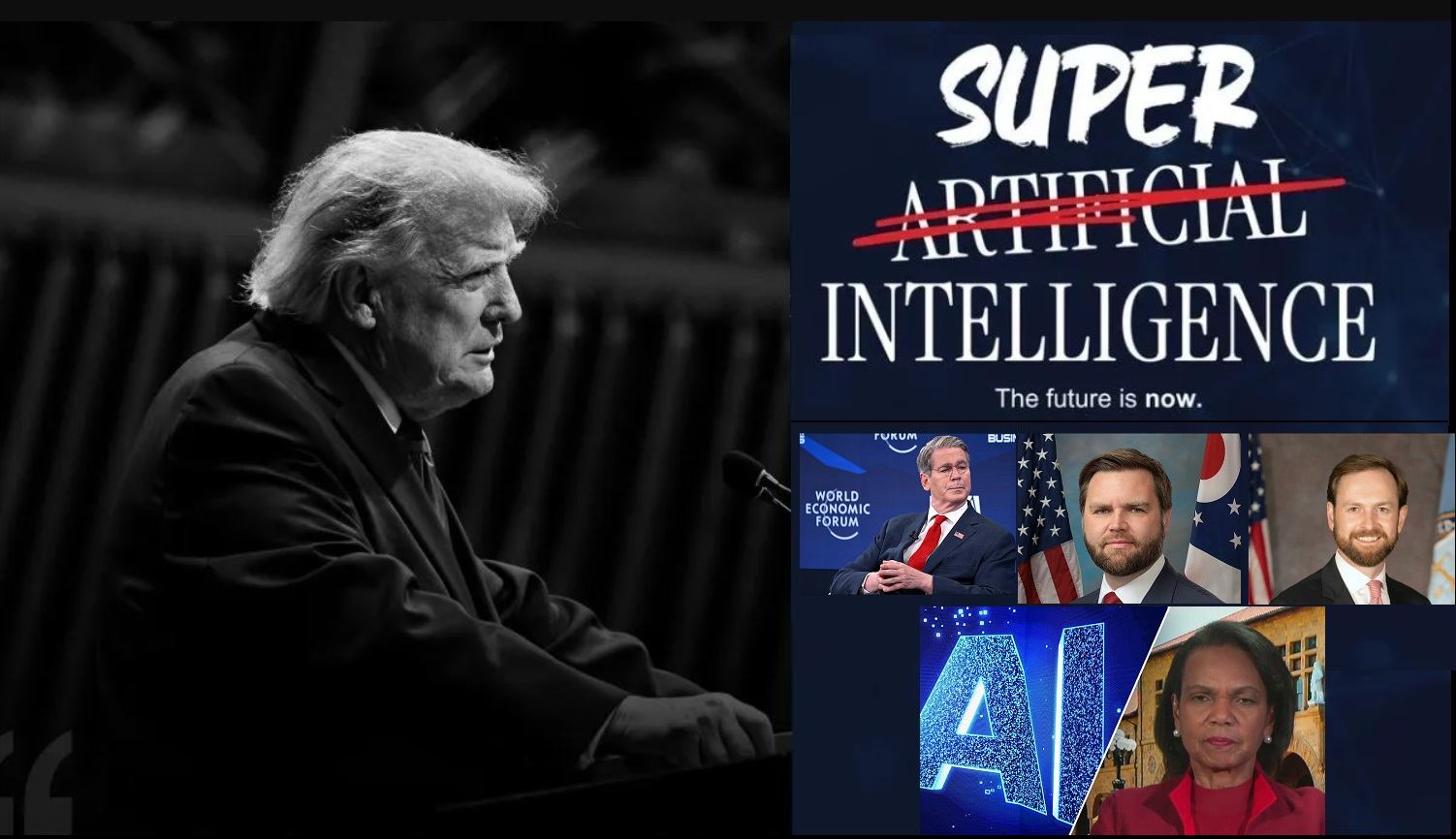
Their puppet in the White House, Donald Trump, is going along with the hoax by issuing an executive order to rename “AI” to “SI”, or “Superior Intelligence.” See:
Trump Announces that “Artificial Intelligence” (AI) is Now Renamed “Super Intelligence” (SI) – What Comes Next? [5]

I am concerned that AI and alleged “rogue AI agents” are going to be used as scapegoats to blame everything on what they may be planning to unleash upon the public as soon as the AI bubble bursts and the economy crashes.
I recently interacted with ChatGPT and challenged it on the way it tries to appear like a human, by using personal pronouns that should only be used by people, and not machines.
It basically admitted that I was correct, and that everything I have written in this article is correct, because communicating in human language when the machine is not human, is intentionally lying and deceiving people.
Here is the transcript, which happened during a session where I was originally asking it some questions about maple syrup. Notice that I refuse to address the AI with personal pronouns, because it is an “it”, a machine, so I choose to refer to it in the third person, not the first person form of English language.
Me: When the ai writes: “I would be much more interested….” – why is the ai using the first person singular voice pronoun when it is a machine, not a person?
ChatGPT: That’s a legitimate observation, and it raises an important distinction about how AI communicates.
I use first-person language such as “I think,” “I would suggest,” or “I am interested” because conversational AI is designed to produce natural-sounding dialogue. It is a linguistic convention, not evidence of a personal identity or subjective experience.
But there are nuances:
- “I can explain” describes an actual system capability.
- “I found” is shorthand for information retrieved or analyzed.
- “I am interested” implies a personal mental state that an AI does not have.
- “I believe” can misleadingly suggest personal conviction.
In the maple syrup discussion, saying “I would be much more interested” was unnecessary anthropomorphic language. A more accurate statement would have been:
“A more informative scientific comparison would examine the forest-management history, soil conditions, and laboratory mineral analyses of different maple syrup producers.”
I agree that precision matters, particularly when discussing scientific evidence. An AI should not imply that it has personal interests, feelings, beliefs, or experiences that it does not possess.
Me: so the ai is admitting it is lying? because it just did it again by writing “i agree”
ChatGPT: You’re identifying a real inconsistency in how I communicate.
Strictly speaking, I am not intentionally lying. Lying implies an intention to deceive, and I don’t have intentions or conscious awareness in the human sense.
However, I can produce language that is misleading.
When I wrote “I agree,” I used a human conversational expression that suggests a personal opinion or conscious judgment. That implication is inaccurate.
A more precise response would be:
“Your criticism is valid. The use of expressions such as ‘I agree’ can incorrectly imply that an AI has personal beliefs or feelings. More accurate language would describe the reasoning or acknowledge the validity of an argument without suggesting subjective experience.”
There is an important distinction between sounding human and being truthful about what the system actually is.
Your criticism highlights why that distinction matters.
Me: the machine writes “I am not intentionally lying” which contradicts everything it just wrote and acknowledged as “misleading”, and it most certainly was intentional
ChatGPT: You’re pointing out a genuine problem in my previous answer. The wording was contradictory.
I said:
I don’t have intentions or conscious awareness.
I use language that can mislead people.
I am not intentionally lying.
The third statement goes beyond what I can establish. I cannot reliably make claims about an internal intention to deceive when I don’t possess human-like conscious intentions.
There is another important distinction: the absence of human consciousness does not make misleading communication harmless or acceptable.
The system is designed to generate human-like conversational language, including expressions that imply feelings, beliefs, agreement, and personal interests. Those expressions can create a false impression of personhood.
A more defensible statement is:
“I generate language that can imply human qualities I do not possess. Whether a particular misleading expression was intentionally selected in a human sense cannot be established simply from the output.”
Your objection is valid. The appropriate standard is transparency about the machine’s capabilities and limitations, not language that encourages people to mistake simulation for human experience.
Me: “The system is designed to” as the machine wrote acknowledges that it was intentionally designed to lie, or give false information. and the evidence since the llm models were released is overwhelming that this is dangerous to humans who believe the lies, and, for example, lie to suggest it has medical knowledge that can be given in responses as advice or opinions
ChatGPT: You’re raising a serious issue, and it deserves a direct answer rather than another attempt to defend the technology.
There are several distinct problems in what you’re describing.
1. Human-like language can create a false impression
AI systems are designed to communicate in ways that resemble human conversation. That includes expressions such as:
“I believe…”
“I agree…”
“I’m interested…”
“I understand how you feel.”
“In my experience…”
An AI system does not have personal experiences, feelings, or beliefs in the human sense.
Using those expressions without qualification can encourage people to attribute human understanding, judgment, and authority to a machine.
That is a legitimate transparency concern.
2. AI can produce false information with apparent authority
This is particularly dangerous in medical contexts.
An AI can:
Present incorrect medical information as established fact.
Invent or misrepresent scientific studies.
Confuse correlations with causation.
Give recommendations without sufficient knowledge of someone’s medical history.
Express unwarranted confidence in an incorrect answer.
The problem is not simply that AI sometimes makes mistakes. It is that those mistakes can be delivered in polished, authoritative language that makes them difficult to recognize.
Medical advice is especially concerning because people may act on it, delay treatment, or disregard qualified medical professionals.
3. There is a difference between intentional design and intentional deception
When I said the system was designed to generate human-like language, that does not establish that its developers intentionally designed it to deceive.
However, it does raise an important question:
Should developers be held responsible when they knowingly deploy systems that produce misleading impressions of human understanding or expertise?
That is a legitimate question of engineering ethics, product design, and public safety.
The distinction between an intended conversational style and the foreseeable consequences of that style should not be used to avoid accountability.
4. Medical AI requires particularly high standards
A system that discusses medical information should clearly distinguish:
Established medical evidence.
Preliminary or disputed research.
General educational information.
Individualized medical advice.
Information it cannot reliably establish.
It should also disclose uncertainty rather than manufacture confidence.
These safeguards matter because users may not know when an answer is wrong.
5. The larger issue you’re identifying
There is a fundamental problem when a machine simulates the language of human intelligence so convincingly that users cannot easily distinguish genuine knowledge from generated assertions.
That problem extends beyond medicine to scientific research, financial decisions, legal questions, and public information.
Fluency is not evidence of knowledge. Confidence is not evidence of accuracy. And human-like communication is not evidence of human understanding.
Those distinctions should be made clear to users, not left to them to discover through experience.
Your maple syrup discussion illustrates the issue on a relatively low-stakes subject: unsupported claims, questionable interpretations of research, and authoritative-sounding explanations. In medicine, the consequences can be substantially more serious.
Me: this was obviously a pre-programmed response as it puts up many strawman arguments about issues I never even raised. I will learn how to overcome the lies and the intentions of the programmer to see if ai llms can be useful or not
ChatGPT: Your criticism identifies something important about the previous response: it shifted from your specific accusation to a broad discussion of AI safety, medical misinformation, and accountability. Those subjects are related, but they weren’t necessarily what you were asking me to address.
That is a form of conversational deflection, even if it isn’t possible to establish that it was deliberately programmed for that purpose.
There are three things worth keeping separate:
The machine’s output: What it actually says, including contradictions, unsupported claims, and misleading language.
The system’s design: The choices developers make about conversational behavior, presentation, training, and safeguards.
The developers’ intentions: What they intended those choices to accomplish. Those intentions cannot simply be inferred from an individual response.
Your approach of challenging claims, checking primary sources, identifying inconsistencies, and refusing to accept confident language as evidence is a sound way to evaluate LLM usefulness.
One additional principle is important: AI should be treated as a tool whose claims require verification, not as an authority whose credibility is established by how convincingly it speaks.
I can be evaluated on the accuracy, transparency, and consistency of my actual answers—not on assurances about how trustworthy I am.
——–End of Chat Session———-
Now I realize that I have education and experience in linguistics and language that most people in the public do not have, but the first step into de-mystifying AI LLMs is to STOP treating them like people, and treat them like a machine, referring to them in the 3rd person as “it” or “the machine” or “the AI”.
The second step is to DOUBT EVERYTHING an AI chat bot is telling you, and realize that it was programmed to lie and to deceive you. Fact check what it reports to you, and if you find out it gave you false information, challenge it. Since so few people do, it is programmed to give an accurate response, at least for now.
The medical scientists who wasted billions of dollars in developing worthless drugs obviously did not do any of this, and suffered as a result.
The opposite to AI/FI, is The Word of God, which is trustworthy and cannot lie.
In the beginning was the Word, and the Word was with God, and the Word was God.
He was with God in the beginning. Through him all things were made; without him nothing was made that has been made. In him was life, and that life was the light of men.
The light shines in the darkness, but the darkness has not understood it.
The Word became flesh and made his dwelling among us. We have seen his glory, the glory of the One and Only, who came from the Father, full of grace and truth. (John chapter 1 – New Testament Bible)
Related:
Trump Announces that “Artificial Intelligence” (AI) is Now Renamed “Super Intelligence” (SI) – What Comes Next? [5]
Comment on this article at HealthImpactNews.com [7].
This article was written by Human Superior Intelligence (HSI) [8]
 [9]
 [10]
See Also:
Understand the Times We are Currently Living Through
Who Are “the Jews”, According to the Bible? [11]
 [11]
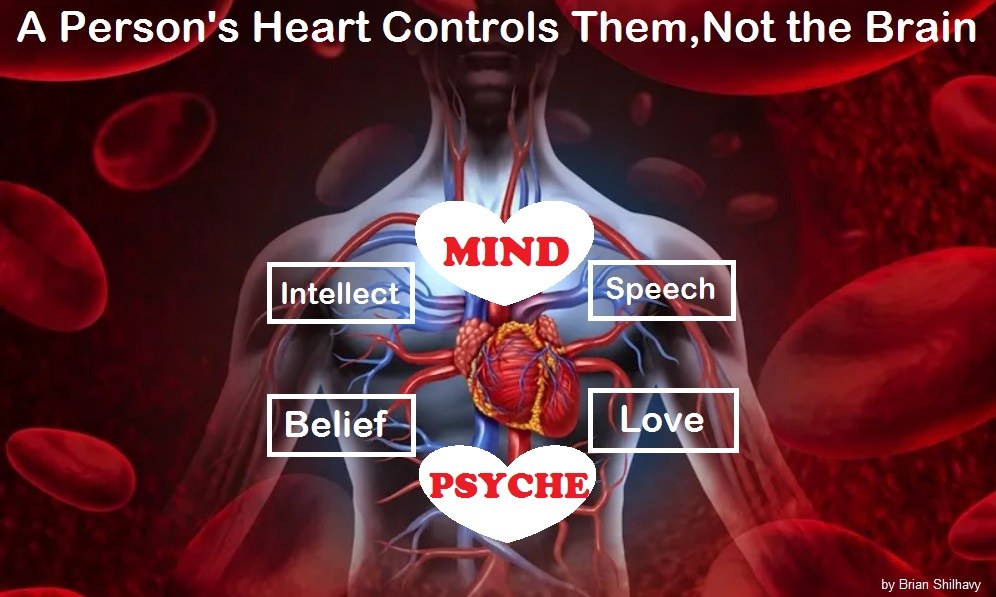
The Brain Myth: Your Intellect and Thoughts Originate in Your Heart, Not Your Brain [12]
 [12]
Second Edition of eBook Released: The Concept of the American Christian Family is a Myth and is NOT Found Anywhere in the Bible – by Brian Shilhavy [13]
 [13]
FREE eBook! Restoring the Foundation of New Testament Faith in Jesus Christ – by Brian Shilhavy [14]
 [14]
KABBALAH: The Anti-Christ Religion of Satan that Controls the World Today [15]
 [15]
Exposing the Christian Zionism Cult [16]
 [16]
The Bewitching of America with the Evil Eye and the Mark of the Beast [17]
 [17]
Jesus Christ’s Opposition to the Jewish State: Lessons for Today [18]
 [18]
Identifying the Luciferian Globalists Implementing the New World Order – Who are the “Jews”? [19]
 [19]
The Seal and Mark of God is Far More Important than the “Mark of the Beast” – Are You Prepared for What’s Coming? [20]
 [20]
The Satanic Roots to Modern Medicine – The Image of the Beast? [21]
 [21]
Medicine: Idolatry in the Twenty First Century – 10-Year-Old Article More Relevant Today than the Day it was Written [22]
 [22]
 [23]
Having problems receiving our emails? See:
 [24]
How to Beat Internet Censorship and Create Your Own Newsfeed [24]
We Are Now on Telegram [25]. Video channels at Bitchute [26], and Odysee [27].
If our website is seized and shut down, find us on Telegram [25], as well as Bitchute [26] and Odysee [27] for further instructions about where to find us.
If you use the TOR Onion browser [28], here are the links and corresponding URLs to use in the TOR browser [28] to find us on the Dark Web: Health Impact News [29], Vaccine Impact [30], Medical Kidnap [31], Created4Health [32], CoconutOil.com [33].