 [1]
[1]
by Brian Shilhavy
Health Impact News
Einkorn is the oldest of the “ancient grains,” and its rising popularity in recent years has led to some interesting findings about this ancient grain, and just how healthy it is.
First, let’s review the history of “einkorn” (triticum monococcum).
History of Einkorn, the Ancient Grain
Einkorn is an ancient grain, and is known as the oldest variety of “wheat.” Einkorn is also sometimes referred to as “farro” or “farro einkorn.” Einkorn was first cultivated 5,000 to 10,000 years ago. It is classified as a “diploid” because it only has two sets of chromosomes. Modern wheat varieties are classified as “hexaploid,” having six sets of chromosomes, due to a long history of hybridization.
Einkorn is thought to have originated in the upper area of the Fertile Crescent of the Near East (Tigris-Euphrates regions), and is quite probably the main grain recorded in the earliest biblical history. Einkorn became widely distributed throughout the Near East, Transcaucasia, the Mediterranean region, southwestern Europe, and the Balkans, and was one of the first cereals cultivated for food.
Another ancient grain, emmer, has four sets of chromosomes and was probably an early hybrid of wild einkorn that was more suitable for a wider range of climates and geographical areas, particularly warmer climates. Emmer became the predominant wheat throughout the Near and Far East, Europe and northern Africa until about 4,000-1,000 BCE, although it was still cultivated in isolated regions such as south-central Russia into the last century, and even today remains an important crop in Ethiopia and a minor crop in Italy and India.
The oldest hexaploid grain and the predecessor to modern wheat is probably spelt. Spelt was a hybrid of emmer with more adaptability then emmer. These three ancient grains are known as “the covered wheats,” since the kernels do not thresh free of their hard coverings, making them more labor intensive to mill.
These ancient grains went through a long history of hybridizations to make them easier to mill and process into our modern day wheat, and to make them more desirable for bread making with a higher gluten content. But due to gluten toxicity issues in modern times, many are reviving the ancient varieties of grains, and einkorn is the oldest.
Nutritional Characteristics of Einkorn
The ancient grain einkorn is packed with nutrition. It is a rich source of the beta carotene lutein, a powerful antioxidant. Einkorn has the highest amounts of lutein of any other variety of wheat.
Einkorn is also a rich source of tocotrienols and tocopherols, powerful antioxidants and forms of Vitamin E. Compared to modern wheat varieties, einkorn has higher levels of protein, crude fat, phosphorous, and potassium.
Recent Research on Einkorn
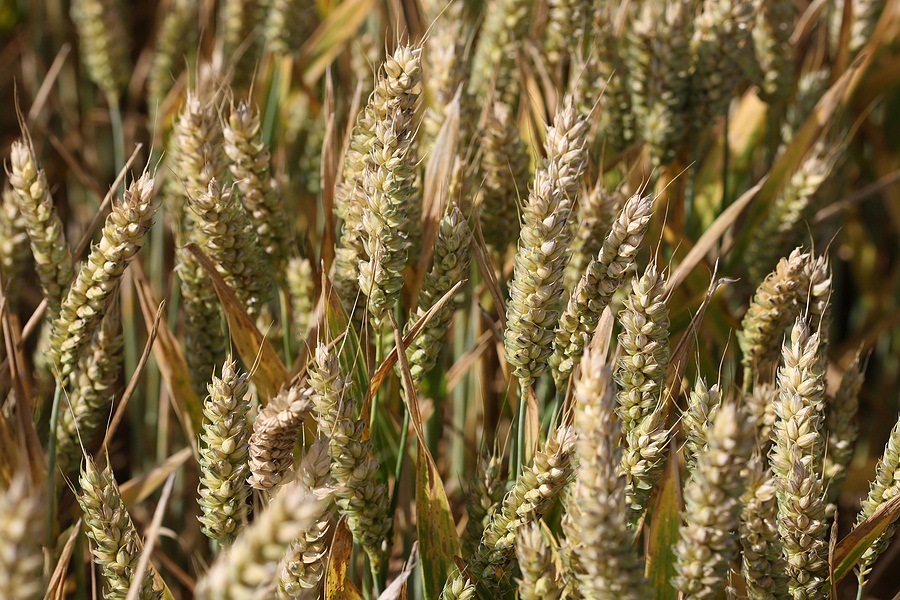
Fortunately, recent research has looked beyond the modern dogma which claims that the “gluten” found in wheat varieties is toxic to human health, focusing instead on how wheat is grown and processed, since the gluten from grains has been a part of the diet of humans for many thousands of years and was always considered healthy.
We have published much of this research ourselves in recent years. Here are some articles we have published in the past:
Common Weedkiller Used in Modern Agriculture Could be Main Factor in Gluten Intolerance [2]
Is the Gluten Intolerance “Epidemic” as Bad as Claimed or a Clever Marketing Tool? [3]
Is This Enzyme in Processed Food Responsible for Gluten-Sensitive Diseases? Gluten May Not Be the Problem [4]
There have also been studies done in the past looking at the gut’s microbiome and repairing that to properly digest gluten:
Probiotics Prevent Gluten Sensitivity and Intestinal Damage from Gliadin [5]
More recent studies, many of them done in Turkey where einkorn (known as Siyez in Turkey) is native, and not an introduced crop (like in the U.S.), have shown that einkorn is unique in producing lactic acid bacteria and other “probiotics” necessary for gut health.
This is accomplished by using traditional “sourdough” preparations of the flour.
Enterococcus durans SL70, a Novel Exopolysaccharide Producer from Traditional Sourdough Fermentation of Einkorn (Triticum monococcum L. ssp. monococcum)
Research background
Given the potential of microbial exopolysaccharides from lactic acid bacteria in various industrial processes, alternative sources for the isolation of lactic acid bacteria are highly topical. In this study, we used a traditional sourdough from einkorn (Triticum monococcum L. ssp. monococcum) as a source of lactic acid bacteria for the isolation, identification and determination of exopolysaccharide producers.
Experimental approach
The sourdough was prepared from einkorn according to the traditional method. Lactic acid bacteria were isolated and purified using the single colony technique on MRS and M17 media. The isolates were characterised using matrix-assisted laser desorption ionization-time of flight mass (MALDI-TOF) spectrometry. All isolates were analysed for extracellular polysaccharide production and one isolate was selected for purification and characterisation of its polysaccharide.
Results and conclusions
The isolates were identified as Lactobacillus plantarum, L. paraplantarum, L. brevis, Pediococcus pentosaceus, Enterococcus faecium and E. durans. The production of exopolysaccharides by all lactic acid bacteria was evaluated and it was found that all strains (except one) were capable of producing exopolysaccharides. One polysaccharide (EPS-SL70) was purified from the isolates of E. durans SL70. This anionic heteropolysaccharide had, in addition to the carbohydrate backbone, a protein structure that did not contain nucleic acid. The carbohydrate backbone consisted of mannose, glucose, rhamnose, arabinose, xylose and galactose.
Novelty and scientific contribution
The microbial flora of traditional einkorn sourdough has been identified in this study and represents the first report on the exopolysaccharide production by lactic acid bacteria in traditional einkorn sourdough. Additionally, Enterococcus durans from einkorn sourdough was identified as a new exopolysaccharide producer.
Full study [6].
In another study done in Turkey, they added einkorn flour to “Peksimet“, a traditional Turkish twice-baked bread valued for its hard, dry texture, long shelf life, and role as a durable staple food in Turkish and Turkish-Cypriot cuisine.
They found that the einkorn flour resulted in a significant decrease in the glycemic index, which is important for those suffering from diabetes or high blood sugar due to the consumption of too many carbohydrates.
In vitro glycemic index, acrylamide content, and some physicochemical and sensorial properties of special dried bread (Peksimet) enriched with einkorn wheat (Tiriticum monococcum L.) flour
Introduction
Bread is the most consumed basic nutrition source in the world. Bread is an important nutrient product in terms of being cheap, satisfying, and a good source of energy. In general, a bread comprises 50.5% carbohydrates, 37%, 8.7% protein, 3.2% fat, and 2.0% ash, and 100 g of bread provides an average of 270 kcal of energy (Yuksel and Kayacier 2022).
Since ancient times, dough has been prepared by adding flour to products containing lactic acid bacteria, such as yogurt and cheese. Afterwards, new yeast is obtained by leaving this dough to ferment in a warm environment. Then, a new fermentation process is performed with this yeast to make new dough.
This process is called sourdough leavening, and the bread obtained by this method is called sourdough bread (Hansen and Schieberle 2005). Bread prepared through the sourdough method has a short shelf life due to the high humidity level it contains. For this reason, these breads are dried and turned into peksimet to increase their shelf life (Axel et al. 2017; Çağlar 2020).
Peksimet is a food product that is produced by removing moisture from bread and can remain unspoiled for a long time. The definition of peksimet by the Turkish Language Institution is as follows; “It is a long-lasting bread that is cut into slices after baking and dried with heat.” (Çağlar 2020).
One of the most important concerns of the food industry is the shelf life of foods. Bread has a short shelf life because of problems such as staleness and mold (Axel et al. 2017; Yuksel and Kayacier 2022). However, peksimet can be easily consumed as it can be stored for a long time. In addition, peksimet gains new nutritional properties such as high enzyme-resistant starch and low glycemic index during the drying period. (Çağlar 2020).
Siyez (Triticum monococcum L. subsp. Monococcum) belongs to the genus Triticum breed. It is referred to as einkorn in the literature.
The genetic structure of einkorn, which is accepted as the ancestor of wheat, is a diploid (14 chromosomes). The contents of einkorn wheat are as follows: 11.6% moisture, 65% carbohydrates, 2.8%–4.2% fat, 2.3%–2.8% ash, and 11.83–25.2% protein. In addition, einkorn wheats have high carotenoid (maximum lutein: 8.1 mg/kg), tocopherol (tocol: 77.96 mg/kg), and phenolic contents.
Thanks to these compounds, which are known as functional compounds, einkorn products are healthier than (Hidalgo and Brandolini 2014; Loje et al. 2003).
The aim of this study was to enrich peksimet with einkorn flour in order to present a new healthy peksimet product with long-term self-life for the food industry. For this purpose, after drying the breads prepared with sourdough, peksimet samples were collected and the physicochemical, color, bioactive, and sensory properties of these samples were investigated.
Full study [7].
Einkorn Grown in the U.S.
In the U.S., einkorn is an introduced crop that is gaining in popularity. Unfortunately, most of the einkorn samples we have tested that were grown in the U.S. have been contaminated with Bayer/Monsanto’s glyphosate, the toxic, cancer-causing ingredient in the herbicide RoundUp.
We have had much better success in finding einkorn that tests clean of glyphosate in Italy, where it is also an introduced crop.
Now that I know what the Turkish word is for einkorn (Siyez), I am in the process of reaching out to my Turkish contacts to begin the process of hopefully sourcing einkorn from Turkey, where it is native to the region, known as part of the “fertile crescent” where einkorn and other, older forms of wheat originated.
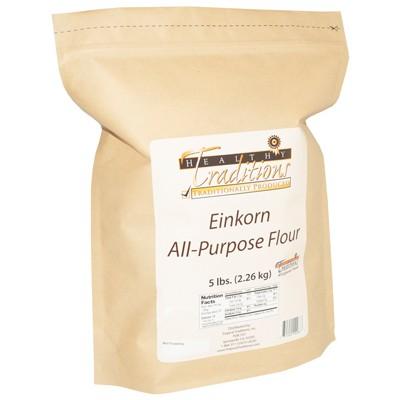
You can see the current einkorn products we sell from my Healthy Traditions store here [8].
 [8]
[8]
Comment on this article at HealthImpactNews.com [9].
This article was written by Human Superior Intelligence (HSI) [10]
[10]
 [11]
[11]
 [12]
[12]
See Also:
Understand the Times We are Currently Living Through
The Brain Myth: Your Intellect and Thoughts Originate in Your Heart, Not Your Brain [13]
 [13]
[13]
Is God’s Patience About to Run Out on the United States? [14]
 [14]
[14]
Second Edition of eBook Released: The Concept of the American Christian Family is a Myth and is NOT Found Anywhere in the Bible – by Brian Shilhavy [15]
 [15]
[15]
FREE eBook! Restoring the Foundation of New Testament Faith in Jesus Christ – by Brian Shilhavy [16]
 [16]
[16]
KABBALAH: The Anti-Christ Religion of Satan that Controls the World Today [17]
 [17]
[17]
Exposing the Christian Zionism Cult [18]
 [18]
[18]
The Bewitching of America with the Evil Eye and the Mark of the Beast [19]
 [19]
[19]
Jesus Christ’s Opposition to the Jewish State: Lessons for Today [20]
 [20]
[20]
Identifying the Luciferian Globalists Implementing the New World Order – Who are the “Jews”? [21]
 [21]
[21]
The Seal and Mark of God is Far More Important than the “Mark of the Beast” – Are You Prepared for What’s Coming? [22]
 [22]
[22]
The Satanic Roots to Modern Medicine – The Image of the Beast? [23]
 [23]
[23]
Medicine: Idolatry in the Twenty First Century – 10-Year-Old Article More Relevant Today than the Day it was Written [24]
 [24]
[24]
 [25]
[25]
Having problems receiving our emails? See:
 [26]
[26]
How to Beat Internet Censorship and Create Your Own Newsfeed [26]
We Are Now on Telegram [27]. Video channels at Bitchute [28], and Odysee [29].
If our website is seized and shut down, find us on Telegram [27], as well as Bitchute [28] and Odysee [29] for further instructions about where to find us.
If you use the TOR Onion browser [30], here are the links and corresponding URLs to use in the TOR browser [30] to find us on the Dark Web: Health Impact News [31], Vaccine Impact [32], Medical Kidnap [33], Created4Health [34], CoconutOil.com [35].